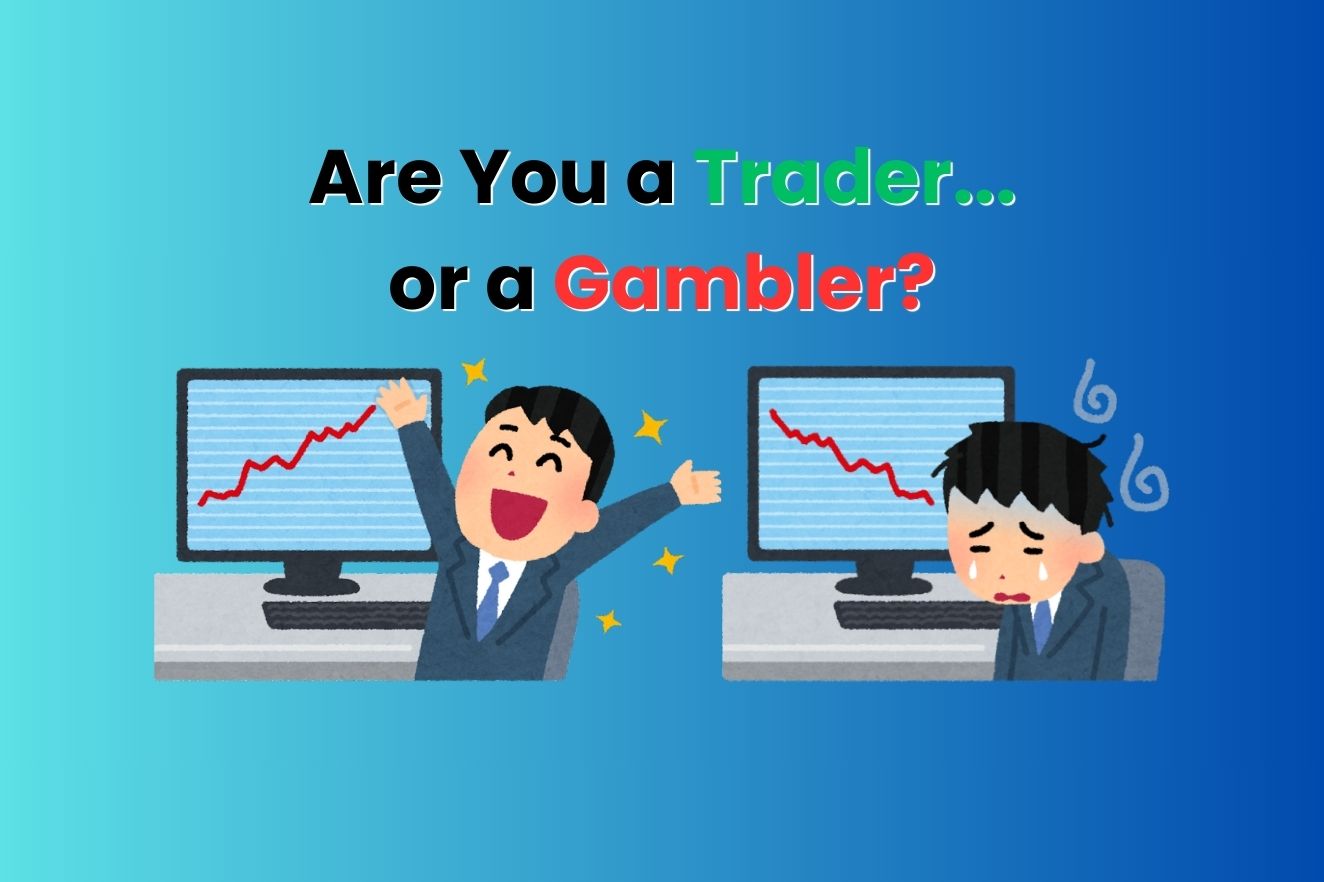
(Or the journey of “handing over your wallet to your emotions” – a heartfelt story for anyone who’s ever blown their account and asked themselves, “Wait… what am I doing?”)
Have you ever been in this situation?
- First trade – a small win of 5 or 7 units, feeling excited, quickly taking profits.
- Second trade – “Today’s green, things look great,” so you double your volume. Market suddenly reverses.
- Third trade – trying to recover losses, you go bigger. Result: a full red day.
- Fourth trade – “I’m already burned, let me top up one last time.”
- Fifth trade – with nothing left to lose, and yep… nothing left indeed.
Sounds like gambling, right? It really is.
But it’s also everyday life on the trading floor, a story I and many traders have lived through.
Trading itself doesn’t make you a gambler.
Your psychology does.
When you start trading, you believe that mastering the right method and technical indicators will make you win. But the longer you trade, the more you realize:
Success in trading isn’t about always being right; it’s about managing your mind well.
In my opinion:
- 30% is technical analysis
- 30% is risk management
- 30% is trading psychology
- 10% is… luck (prayers from ancestors, no one has a magic tip right before a market flip)
As someone who has blown accounts and suffered through rough days, I decided to stand up and improve where I failed. Reviewing my trade journal, I found the weak link was psychology — emotions running wild. So I dived into articles and videos about this topic:
The Gambler’s Mind — A Neuroscience Perspective
You’re not weak — your brain is just wired to be logical… in its own tricky way.
- Dopamine – The “Win” Addiction Hormone
Each win releases dopamine — the “feel-good” hormone.
→ You feel great.
→ You want to win more.
→ You increase your volume, even when the next setup isn’t perfect.
Worse, dopamine also releases when you almost win but lose — making you want to chase losses harder.
This is called the “near-miss effect” — the reason slot machines and Forex feel strangely similar.
- Amygdala – The Brain’s Alarm Bell for Fear and FOMO
Lose 2 trades in a row? Your brain’s emotional center, the amygdala, takes over.
You stop thinking clearly.
You trade out of frustration, fear, and the refusal to accept losses.
- The “Sunk Cost” Fallacy – Holding Losing Trades
You lose on a trade, but instead of cutting losses, you hold on.
Why? Because you feel like, “I’ve already lost money, might as well try to win it back.”
The result? You lose even more.
This is a very common psychological bias — not just in traders!
How to Stop Becoming a “Gambler”?
If you want trading to be your profession, not a game, start with:
- Trade Like a Business, Not Like a Player
- Business owners have plans.
- Players have emotions.
A smart trader risks little, aims for steady gains, not big bets chasing small wins then burning out.
- Fix Your Volume and Know When to Stop
- Set your volume before each session. Calculate your risk carefully.
For example, if your account is $100 and you want to trade 10 times, limit loss per trade to $10 max. - Lose 2 trades? Stop immediately. Close the app, no excuses. Train your brain to build good habits.
- Win 2R? Take a break.
- Feeling unstable? Close the charts and relax — take a bath, breathe deeply.
- Retrain Your Dopamine Reward System
- Don’t reward yourself only when you profit (sometimes luck can fool you).
- Reward yourself for following your plan — win or lose. For example, listen to your favorite song, play with your pet, or enjoy a treat.
- Accept Losses as Part of the Game
Markets are probabilistic. No one wins 100%. Good setups don’t guarantee wins.
Control what you can — yourself.
When losing on a good setup, remind yourself:
“I’m trading by the plan. This is part of building long-term success. One losing trade or day doesn’t define me.” - Keep a Trading Journal
Writing down your trades activates your rational brain and helps you stay clear-headed.
Include: entry/exit times, prices, volume, P/L, feelings before and after the trade. - Take Care of Your Body and Mind
A healthy body supports a clear mind.
- Exercise daily, even 2 minutes is enough.
- Drink water, eat well, sleep on time.
- Avoid short, addictive videos (like TikTok) that spike dopamine.
- Find positive hobbies.
- Practice meditation or deep breathing when stressed.
- Take breaks: sit for 60 minutes, then stand and walk for 5 minutes.
Final Thoughts
Trading isn’t a “get rich quick” scheme — but it’s a powerful journey to know yourself better.
If you’ve acted like a gambler before, congratulations — you’re not alone. But you don’t have to stay there forever.
Learning technical analysis takes 1-2 months.
Learning to control yourself can take a lifetime.
Making money was never easy — so let’s stay strong, keep learning, practicing, improving, and never give up before success comes knocking.